
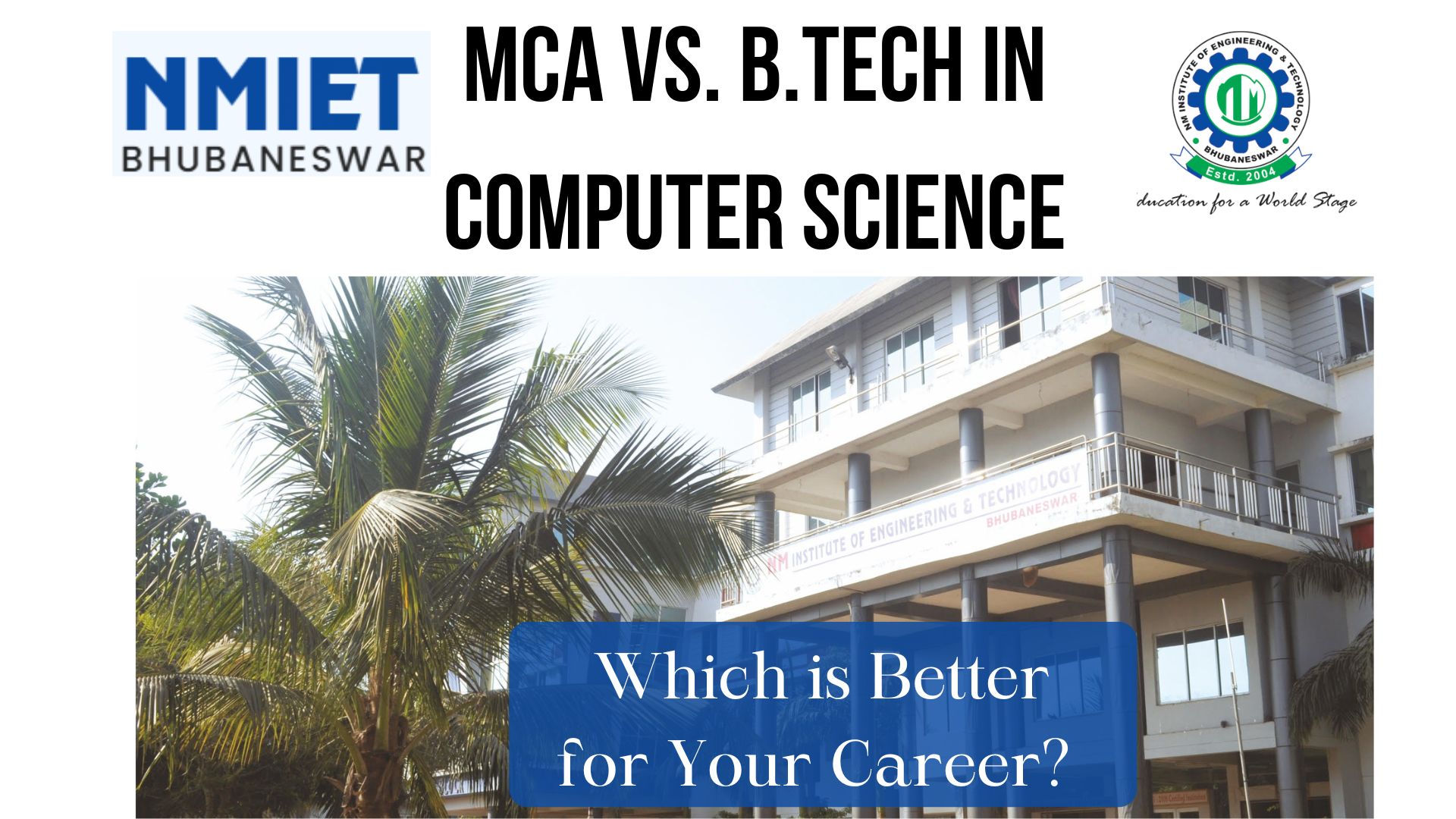
MCA vs. B.Tech in Computer Science: Which is Better for Your Career?
At first glance, comparing BTech and MCA in Computer Science might seem like comparing apples to oranges- one is an undergraduate program and the other a postgraduate specialization. However, this discussion is crucial for prospective tech professionals.
While a BTech degree in Computer Science offers a robust foundation in engineering principles and technical problem-solving right from school, an MCA focuses on developing specialized application skills for those transitioning from non-engineering backgrounds or seeking deeper expertise post-bachelor’s.
In this article, we’ll explore the unique strengths, career prospects, and educational paths of both programs, helping you determine which aligns best with your career goals in the dynamic field of computer science.
Understanding the Programs
B.Tech in Computer Science:
B.Tech CSE is a four-year undergraduate engineering program, the BTech provides a rigorous foundation in mathematics, programming, algorithms, data structures, and hardware principles. It emphasizes engineering fundamentals, problem-solving, and research-driven learning.
This career path is designed for students who have completed their 10+2 education with a focus on science subjects, particularly Physics, Chemistry, and Mathematics.
MCA (Master of Computer Applications):
MCA is typically a 2-year (4 semesters) postgraduate program, focusing on application development, software engineering, database management, and emerging IT trends. It is geared toward students who already hold an undergraduate degree, regardless of their discipline. However, a background in mathematics or computer science can be advantageous. MCA programs are more oriented towards practical applications and software development skills.
Key Differences at a Glance
| Aspect | B.Tech (CSE) | MCA |
|---|---|---|
| Degree Level | Undergraduate (4 years) | Postgraduate (2 years after bachelor’s) |
| Entry Requirement | 10+2 with PCM | Bachelor’s degree (any discipline) |
| Focus | Broad engineering + hardware/software | Specialized software development |
| Ideal For | Students starting fresh in tech | Non-engineering grads transitioning to IT |
Curriculum and Skill Development
B.Tech (CSE)
- Core Subjects: Computer networks, algorithms, operating systems, embedded systems, and engineering mathematics.
- Practical Exposure: Labs, internships, and projects emphasizing hardware-software integration.
- Specializations: AI, cybersecurity, data science, or mechanical/electrical engineering minors.
MCA
- Core Subjects: Advanced programming, database management, web/app development, and cloud computing.
- Practical Focus: Industry-oriented projects, certifications, and specialized training in areas like cybersecurity or AI.
- Research Emphasis: Includes dissertations and R&D projects in final semesters.
Career Prospects
| Role | B.Tech (CSE) Graduates | MCA Graduates |
|---|---|---|
| Entry-Level Jobs | Software engineer, system analyst | Software developer, web developer |
| Mid-Career Roles | Data scientist, network engineer | Database admin, IT consultant |
| Leadership Roles | Project manager, tech startup founder | IT project manager, cloud architect |
| Industries | IT, core engineering, R&D | Software services, consulting, SaaS |
Salary Trends in B.Tech & MCA:
- B.Tech graduates often command higher starting salaries (₹4–10 LPA) due to broader engineering skills.
- MCA graduates catch up with experience, especially in specialized roles (₹5–15 LPA).
Higher Education and Specialization
- After B.Tech:
- Pursue M.Tech for advanced engineering roles or MBA for management.
- PhD opportunities in interdisciplinary tech fields.
- After MCA:
- Opt for PhDs in computer science or certifications (e.g., AWS, cybersecurity).
- MBA for IT management roles.
Factors to Consider before Opting for B.Tech and MCA
- Academic Background:
- Choose B.Tech if starting fresh post-12th.
- Opt for MCA if switching to IT after a non-engineering bachelor’s.
- Career Flexibility:
- B.Tech offers wider options (core engineering, hardware, software).
- MCA is ideal for laser-focused software/IT roles.
- Time and Cost:
- B.Tech requires 4 years; MCA adds 2 years post-bachelor’s.
- Global Opportunities:
- B.Tech is widely recognized for higher studies abroad.
- MCA is valued for software roles in multinational firms.
Who Should Pursue B.Tech in Computer Science?
- Aspiring Engineers:
Students who are passionate about diving deep into technical details, engineering concepts, and system design tend to benefit more from a B.Tech program. - Early Starters:
Those coming straight from school with a strong foundation in science subjects and a desire to build a robust technical base should consider B.Tech. - Research and Innovation Focus:
If your long-term goals include research, product development, or pursuing advanced engineering roles (or further studies like M.Tech or an MBA), the in-depth curriculum of a BTech offers a solid launching pad. - Broad Technical Exposure:
BTech students gain exposure to both hardware and software aspects of computing, which can be beneficial if you wish to explore diverse roles in the tech industry.
Who Should Pursue MCA?
- Career Switchers and Graduates from Other Disciplines:
If you already have an undergraduate degree in a field other than computer science but want to transition into IT and software development, MCA is a practical choice. - Specialized Application Focus:
Students aiming to become proficient in application development, modern programming paradigms, and emerging IT technologies (like cloud computing, AI, and data analytics) may find the MCA curriculum more directly aligned with these interests. - Industry-Ready Skills:
The MCA program’s emphasis on hands-on projects, software engineering practices, and industry case studies makes it suitable for those looking to quickly gain practical skills relevant to current IT market demands. - Time and Prerequisites:
For graduates who already hold a bachelor’s degree, the MCA offers a focused, postgraduate curriculum without the need for a second full undergraduate program, thus saving time if you wish to enter the IT workforce swiftly.
What Might Each Group Be Missing Out On?
- B.Tech Students:
While B.Tech provides a comprehensive engineering education, some students might find that it lacks is thelacks the concentrated focus on software application development. This means that graduates may need to pursue additional certifications or self-learning in modern software practices to meet the dynamic demands of the IT industry. - MCA Students:
MCA programs generally offer less exposure to the core engineering and mathematical concepts emphasized in a B.Tech curriculum. This can be a drawback if you later decide to explore roles that require a deep understanding of hardware interactions or wish to engage in technical research and development. In some cases, MCA graduates might need supplementary training if they aim to work in domains that demand rigorous engineering fundamentals.
Making the Decision
- Choose B.Tech if: You seek a broad engineering foundation, hardware-software balance, or aspire for roles in R&D or core tech sectors.
- Choose MCA if: You’re transitioning from a non-engineering field, want deep software expertise, or target cost-effective, specialized IT roles.
Both paths offer strong job markets, but align your choice with long-term goals and existing qualifications. For instance, a B.Tech graduate might design embedded systems at a tech firm, while an MCA professional could lead a SaaS product team.